


Alsace Métiss 2023
Alsace | White | 2023
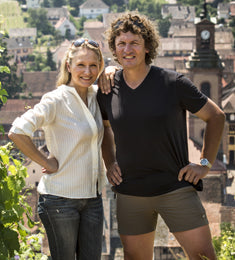
Jean-Christophe Bott, a passionate Alsatian winemaker, lovingly cultivates his 15 hectares spread across 7 communes. His estate, converted to organic and biodynamic farming, produces exceptional, balanced, and powerful wines. Heir to a centuries-old family tradition, he embodies the quest for authenticity and excellence, crafting wines worthy of the greatest terroirs.


How to best appreciate this wine?
Food and wine pairing suggestions
Serving suggestions
Serve at 8° to 10°C
Aging potential
Ready to drink
Our opinion on the cuvée
Discover wines from the same estate


Domaine Bott-Geyl
Located in Beblenheim, Alsace, Domaine Bott-Geyl has been managed by Jean-Christophe Bott since 1993. The estate currently spans approximately 15 hectares across several communes, featuring fragmented plots that include specific lieux-dits, a historic clos, and several Grand Crus, such as Schoenenbourg, Sonnenglanz, and Wineck-Schlossberg.
Vineyard management has been based on organic farming since 2000, followed by biodynamic practices since 2002. Viticultural work prioritizes moderate yields, meticulous attention to grape ripeness, and precise soil analysis. Each plot is monitored individually to preserve its natural balance and expressive potential.
Winemaking is conducted with minimal intervention, featuring long fermentations, often with indigenous yeasts, and patient aging tailored to each cuvée. The estate cultivates all Alsatian grape varieties, with a central focus on Riesling, but also including Gewurztraminer, Pinot Gris, and Pinot Noir. ... Read more
Why choose Les Grappes

Over 400 winemaker cuvées

Fast and efficient logistics.

Personalized support.


