
Roussillon Region
Everything You Need to Know About the Roussillon Region Roussillon is a wine-growing region located in the far south of France, between the Mediterranean Sea and the Spanish border. Long considered part of Languedoc, the Roussillon wine region has a strong identity, shaped by a very sunny climate, complex geology, and a long tradition of winemaking. The region produces…


Roussillon Region
Everything You Need to Know About the Roussillon Region
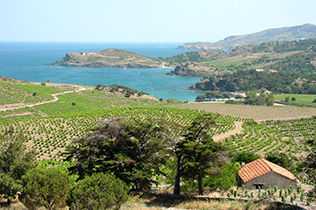
Roussillon is a wine-growing region located in the far south of France, between the Mediterranean Sea and the Spanish border. Long considered part of Languedoc, the Roussillon wine region has a strong identity, characterized by a very sunny climate, complex geology, and a long-standing winemaking tradition. The region produces red, white, and rosé wines, as well as iconic natural sweet wines.
A vineyard with a distinct Mediterranean climate
Roussillon enjoys a warm, dry Mediterranean climate, sometimes described as almost Spanish. Summers are long and sunny, winters are mild, and rainfall is concentrated mainly in the fall and spring in the form of thunderstorms.
The vineyard is surrounded by the Albères, Canigou, and Corbières mountain ranges and bordered by the Mediterranean Sea. This terrain creates a wide variety of exposures and microclimates, which are ideal not only for growing grapes but also for fruits such as apricots, peaches, cherries, and nectarines.
A wide variety of soils
The soils of Roussillon are among the most diverse in France. They include:
-
shale, which is particularly abundant in the Agly Valley
-
alluvial terraces
-
limestone, clay-limestone, gneiss, or granite soils
This geological diversity allows for the production of wines with very different profiles depending on the region and appellation.
Grape Varieties and Wine Styles
Most Roussillon wines are blends.
The main grape varieties are:
-
Grenache (black, gray, and white), the region’s primary grape variety
-
Carignan, Syrah, and Mourvèdre for the reds
-
White Grenache, Macabeu, Malvasia, and Muscat for the white wines
The reds are often sunny and full-bodied, the whites can be both mineral and expressive, and the rosés remain a bit of a hidden gem.
Natural sweet wines from Roussillon
The Roussillon region is historically known for its natural sweet wines (VDN), which are produced through a process called “mutage”: adding grape marc brandy to partially fermented must helps preserve some of the natural sugars.
The most iconic is Banyuls, the only naturally sweet wine in France to bear the Grand Cru designation. Made primarily from Grenache grapes grown on schist-rich terraces along the coast, it is aged for a long time, often in wood and sometimes in the sun, developing aromas of dried fruit, cocoa, coffee, and oxidative notes known as “rancio.” These wines are often recommended as a pairing with chocolate.
Roussillon Wine Regions
The Roussillon wine region includes several major appellations:
-
Côtes du Roussillon, which accounts for a large proportion of the reds and whites
-
Côtes du Roussillon Villages, concentrated in the northern part of the region
-
Côtes du Roussillon Les Aspres, for wines from the south
-
Banyuls and Banyuls Grand Cru, for natural sweet wines
Many wines are also marketed underthe Côtes Catalanes PGI designation, which allows for greater flexibility in blends and styles.
Food and Wine Pairings from Roussillon
Red wines from Roussillon pair well with grilled meats, spicy dishes, or Mediterranean cuisine.
White wines pair well with fish, oysters, Collioure anchovies, or dishes made with sun-ripened fruits and vegetables.
Natural sweet wines are particularly well-suited for desserts, chocolate, or sweet-and-salty pairings.
Wineries in Roussillon to explore
This selection highlights wineries that exemplify the diversity and revitalization of the Roussillon wine region:
These regions offer a glimpse into the Roussillon through a range of dry and sweet wines, from approachable to more assertive, all of which bear the distinct mark of their Mediterranean origins.


